Star Trek’s Dominion War arc represented a turning point in the space-faring franchise. With creator Gene Roddenberry passed, the time had come for a new generation of writers to make their mark. The resulting arc was divisive even among the franchise’s production team, but the serialized nature of the Dominion War, andDeep Space Ninein general, contributed to its enduring popularity.
However, with its various alliances, schemes, and heel-face turns, it can be hard to determine just where the Dominion War begins and ends. For instance, werethe insurgent Maquisparticipants in the conflict, or simply collateral damage? What about the mystical Prophets, guardians of Bajor’s wormhole? Whatever the case, one thing is clear: the drums of war were heard in nearly every corner ofStar Trek’s galaxy.

10The Son’a
Whether the villains ofStar Trek: Insurrectiontruly qualify as participants in the Dominion War is unclear based solely on their cinematic appearance. In an attempt to steal the planet B’aku, the Son’a join forces witha corrupt Starfleet admiral. However, Captain Picard and the crew of theEnterprise-E resist the Son’a’s plans, leading to the death of the Son’a’s leader.
RELATED:Darkest Star Trek Storylines, Ranked
An offhand comment in theDeep Space Nineepisode “Penumbra” suggests that this clash had consequences. It is revealed that the Son’a had at least one facility manufacturing vital drugs for the Dominion, suggesting, if not a formal alliance, at least a convergence of interests. The Son’a may have been minor players, but they did have some skin in the game.
9The Bajoran Republic
Founded followingthe withdrawal of Cardassian forcesfrom Bajor, the Bajoran Republic experienced its fair share of teething troubles. These included an attempted military coup by a hard-line group, the Circle, as well as various religious and political schisms.
RELATED:Underrated Star Trek: Deep Space Nine Episodes
As such, it made sense for the Bajoran Republic to decide that discretion was the better part of valor during the Dominion War, choosing neutrality over almost certain occupation. However, despite the Republic’s neutrality, many Bajorans worked to resist the Dominion occupation of Deep Space Nine, while the Bajoran System was often used as a staging point for the Federation Alliance’s forces.
8The Orion Syndicate
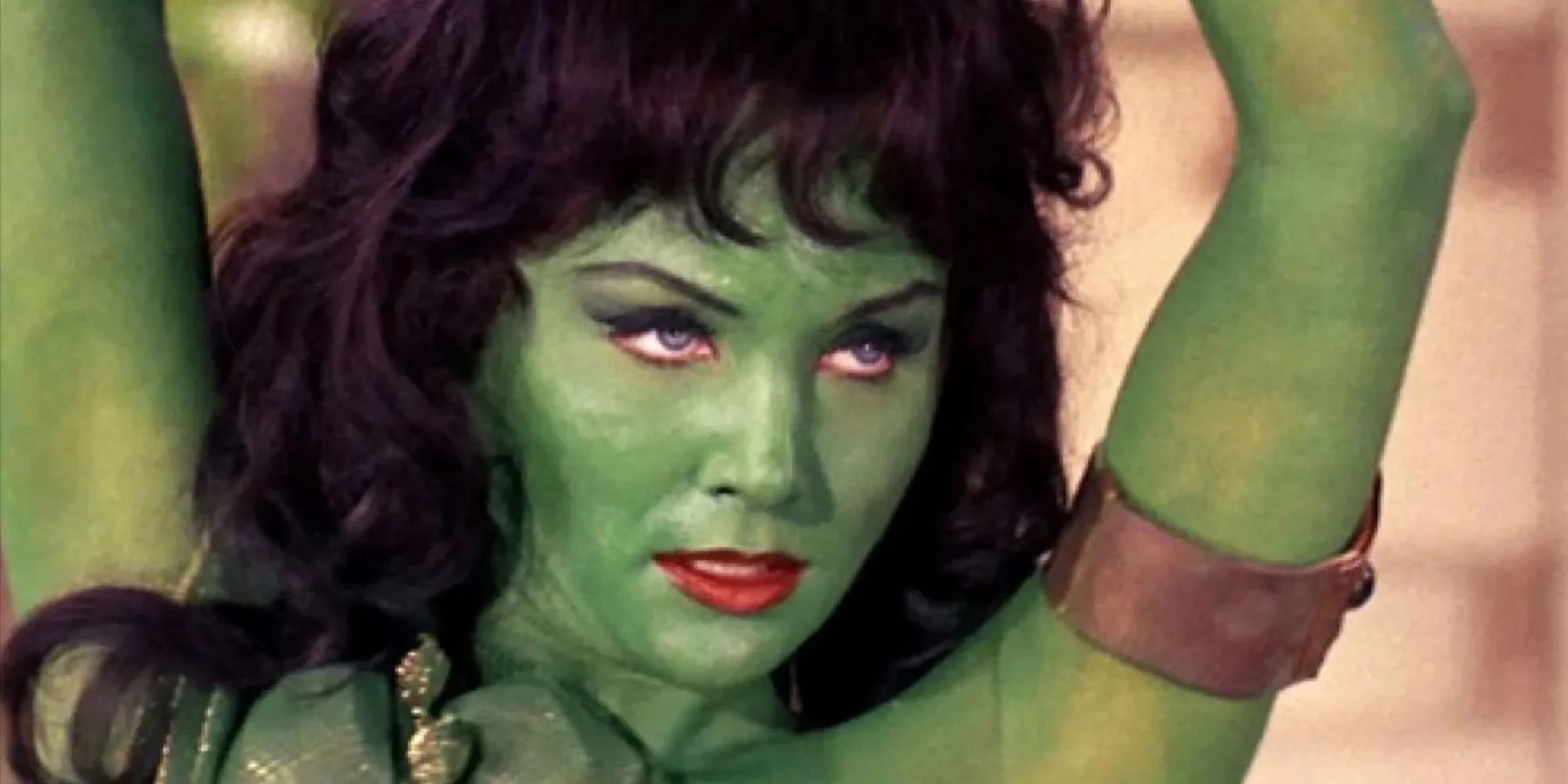
States can be involved in a conflict without actually deploying ships or troops, as proven by the Orion Syndicate. Best known for its seductive green women, this criminal faction attempted to undermine the Federation Alliance by assassinating a Klingon ambassador, clearing the way for further Dominion advances. The plot was foiled by Miles O’Brien in 2374.
The Orion Syndicate demonstrated a long-standing animosity towards the Federation. Indeed, they had attempted to sabotage the admission of the Coridanites into the Federation over a century before by disguising an Orion spy asan Andorian delegate.

7The Prophets and the Pah-wraiths
As extradimensional entities with no conception of linear time, it is unlikely that the god-like Prophets perceived the Dominion War in the same way as the other factions involved. Nonetheless, they did play a part in the conflict, most notably in 2374, when they destroyed a massive wave of Dominion reinforcements transiting the Bajoran Wormhole.
The conflict betweenthe Prophets and the evil Pah-wraithsmay predate the Dominion War, but it certainly touched upon it. By the time of the war’s conclusion in 2375, two of its most prominent figures (Captain Sisko and Dukat) were working on behalf of their respective non-corporeal backers. Regardless of whether the clashes between these entities formed another front in the Dominion War or occurred beyond its limits, the contributions of both the Prophets and their Pah-wraith foes cannot be overlooked.
6The Breen Confederacy
The Breen Confederacy was a latecomer to the Dominion War, joining the conflict in 2375. Their alliance with the Dominion proved a boon to the Gamma Quadrant powerhouse, as Breen weaponry initially devastated the forces of the Federation Alliance — includingthe originalDefiant-class starship.
RELATED:Star Trek: Who Are The Breen?
The association between the enigmatic Breen and the Dominion provoked unease among the Dominion’s Cardassian allies. Despite their impressive entry into the war, the Breen Confederacy did little more than prolong the conflict, as the Federation Alliance was quickly able to counteract the Breen’s new weapons and regain the initiative.
5The Romulan Star Empire
The Romulan Star Empire was an unwilling participant in the Dominion War, having initially signed a nonaggression pact with the Dominion. Indeed, the Vulcans' close relatives were perfectly happy to see the Federation and Klingon Empire take a beating — until evidence emerged that the Dominion were also going to attack the Romulans. Althoughthis evidence was faked, it was enough to bring the isolationist power into the fray.
The addition of the Romulans to the Federation Alliance allowed the Alpha Quadrant coalition to turn the tide of war. However, joining the war caused domestic problems for the Romulans, allowing Shinzon and his Reman scions to seize control of the Star Empire after the end of the conflict.

4The Cardassian Union
Even before the outbreak of the Dominion War, the Cardassian Union represented a thorn in the side of the Federation. The two powers fought the Federation–Cardassian Wars until 2367, and bad blood remained even after the armistice. Questions over the fate of Bajor, a planet formally occupied by the Cardassians that subsequently sought Federation membership, also contribute to tensions.
Under the leadership ofthe megalomaniacal Gul Dukat, the Cardassian Union joined forces with the Dominion. This allowed the Cardassians to repel their Klingon enemies, and the alliance threatened the entire Alpha Quadrant. However, the Cardassians grew increasingly disenchanted with the alliance, leading to the emergence of the dissident Cardassian Liberation Front. The Cardassians eventually broke their deal with the Dominion and joined the Federation Alliance.

3The Klingon Empire
The Klingon Empire was not always a friend to the Federation. Indeed, the two powers had fought as recently as 2373 (caused, in part, by Dominion interference). However, due to the arrival of Dominion ships in the Alpha Quadrant later that year, the Klingon Empire resuscitated its friendship treaty with the Federation to fight the Dominion together.
RELATED:Star Trek: Most Iconic Klingons, Ranked
The mighty Klingon fleetproved essential in winning the war for the allies. However, internal disputes threatened to ruin any hope of victory. Towards the end of the war, Chancellor Gowron ordered the popular General Martok to carry out wasteful fleet maneuvers in an attempt to discredit the war hero. Starfleet’s Worf intervened to resolve the issue, slaying Gowron and naming Martok as the next leader of the Klingon Empire.
2The Dominion
The Dominion,a Gamma Quadrant power blocmade up of the Changelings, Vorta, and Jem’Hadar, represented an existential threat to the Federation and its allies when it opened full-scale hostilities in 2373. The shape-shifting Changelings were able to infiltrate and impersonate, causing chaos, while the Vorta and Jem’Hadar represented a potent military threat.
Although the Dominion eventually surrendered, some within the faction were unwilling to honor the peace. This anti-peace group later formed an alliance with the Borg, posing another threat to the Federation.

1The United Federation of Planets
Founded in 2161, the United Federation of Planets had grown to include many Alpha and Beta Quadrant civilizations by the time of the Dominion War. However,despite its vast size, the utopian nature of the Federation left it ill-equipped to face many of the threats that emerged in the 24th century, including the Borg and the Dominion.
Starfleet, the Federation’s exploratory arm, was reformed as a fighting force. This shift towards militarism proved controversial (both with fans and in-universe), but it ensured the Federation’s survival against the odds. The Federation’s dark underbelly also played a key role in weakening the Dominion’s Founders: a virus developed by Section 31 ended the war, allowing the mostly peaceful Federation to continue its dedication to justice, freedom, and equality.


